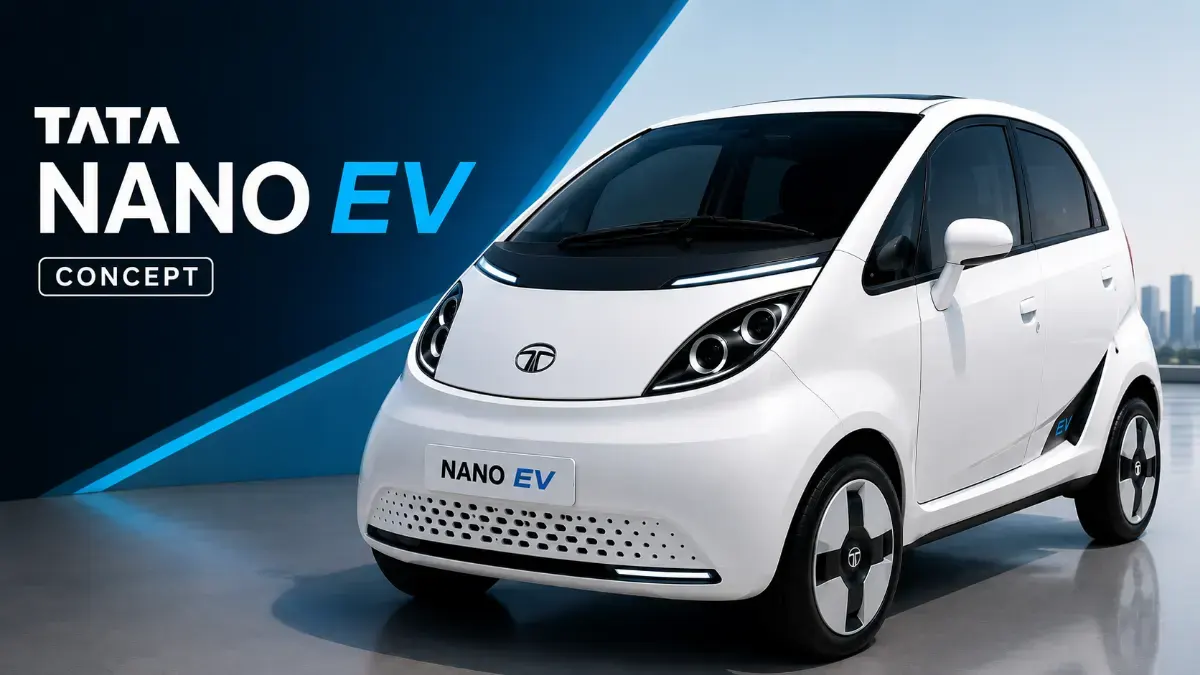
Quick Answer: Tata Motors India Design Head Ajay Jain has hinted at a possible Tata Nano EV comeback in an interview with ABP Auto Live. While the company has not made any official announcement, his comments are among the strongest indications yet that the iconic hatchback could return in an electric avatar.
विषय सूची (Table of Contents)
What Did Tata's Design Head Actually Say?
The Tata Nano stopped rolling off production lines years ago, but it refuses to fade from public memory. Every few months, AI-generated renders and speculative posts claiming a Nano revival go viral on social media. This time, the buzz has fresh fuel — a comment from Tata Motors India Design Head Ajay Jain, made during an interview with ABP Auto Live.
Asked whether the Nano could ever make a comeback, Jain smiled and said "Try Karenge" before opening up about what the car means to him personally and to the company.
"I think the Nano is an incredibly innovative car that put India on the map. It would be a pleasure for me to sit here with you in a few years and put the Tata Nano on the map again, maybe in an electric avatar, maybe in an avatar that the whole world can see."
— Ajay Jain, India Design Head, Tata Motors
To be clear, this is not a confirmation of any upcoming product. But coming from a senior design executive at the company that owns the nameplate, it's arguably the strongest public acknowledgment yet that a Nano EV isn't entirely off the table.
Why A Nano EV Makes More Sense In 2026
When the original Nano launched in 2009, it entered a very different Indian car market. It succeeded in making four-wheeler ownership more accessible, but its "world's cheapest car" tag ended up working against it — many buyers preferred stretching their budgets for larger hatchbacks instead, and the Nano never quite escaped that image.
The market today looks nothing like it did back then. Compact urban mobility has gained real acceptance, electric vehicles have gone mainstream, and Indian buyers are far more open to niche products than they were a decade ago. In that environment, an affordable, city-focused electric car could find a much stronger audience than the original Nano ever did.
It Also Fits Tata's Current EV Strategy
Tata Motors is already India's undisputed leader in electric passenger vehicles. In July 2026, the company retailed 13,678 electric cars, giving it a 41.54% share of the segment — nearly 6,000 units ahead of second-placed Mahindra.
That leadership has been built on the Tiago EV, Punch EV, Nexon EV, Curvv EV, Harrier EV and Sierra EV. But there's still a clear gap below the Tiago EV, Tata's current entry-level EV. A Nano EV could plug that gap — appealing to two-wheeler owners looking to upgrade, and to families wanting an affordable, compact second car for city use.
Tata Has Already Tested An Electric Nano Once Before
Interestingly, this wouldn't be the first attempt at electrifying the Nano platform. Tata Motors had earlier partnered with Coimbatore-based Jayem Automotives to develop the Jayem Neo — an electric version of the Nano built primarily for fleet use. It kept the original Nano's design intact while swapping the petrol engine for an electric powertrain.
Read Also: Maruti Share Price Today
The Jayem Neo used a 17 kWh battery pack with a rear-mounted electric motor, delivering a claimed range of around 130 km. It proved the platform could be adapted for EV use — even if it never became a mainstream retail product.
What Could A Modern Tata Nano EV Offer?
If Tata Motors does eventually revive the Nano, it's unlikely to be a simple recreation of the original car. Safety regulations, customer expectations and battery technology have all moved on significantly over the past decade.
Range: With today's battery technology and Tata's growing EV expertise, a modern Nano EV could realistically offer a range of around 200 km or more.
Performance and safety: Expect a meaningful step up over the Jayem Neo, with significantly improved crash safety and better performance.
Cabin: A more premium, feature-rich interior while retaining the Nano's signature compact footprint.
Positioning: Rather than being sold as the "cheapest car," it could be marketed as a smart, practical electric city car.
Why People Still Want The Nano Back
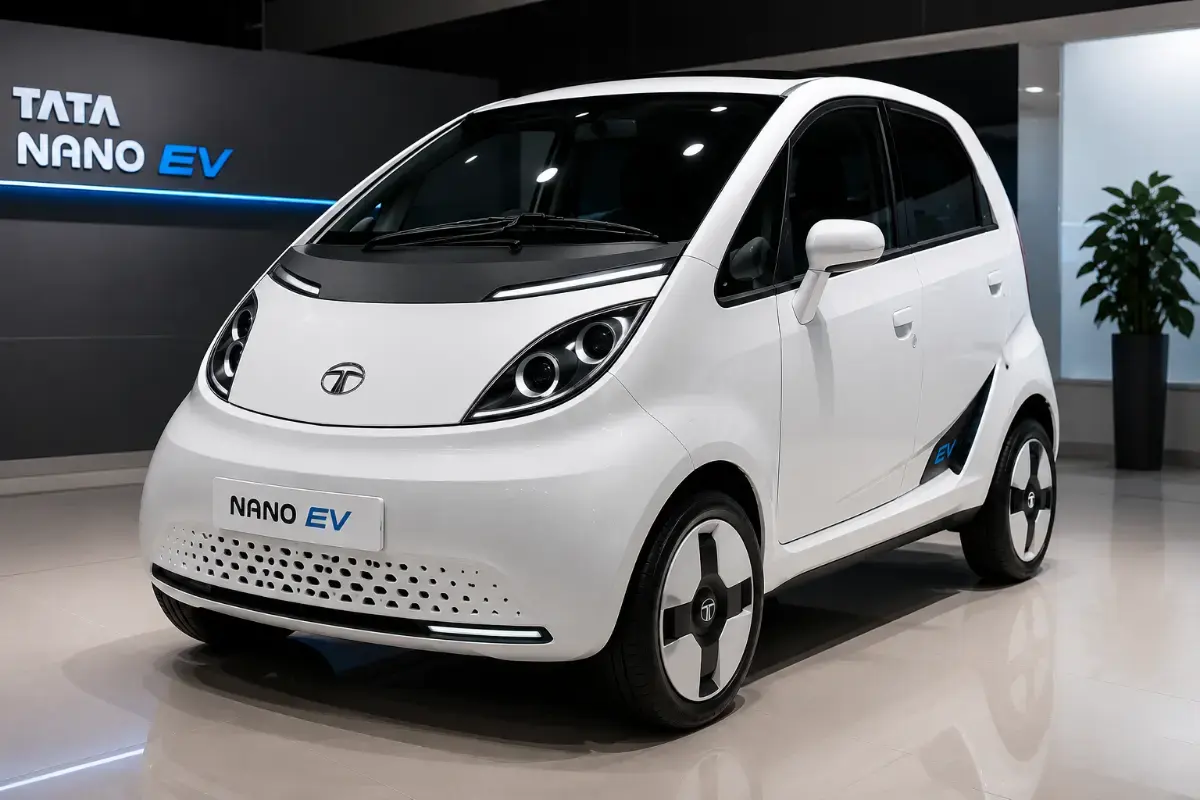
Jain also addressed the flood of AI-generated Nano concepts that keep surfacing online. Rather than dismissing them, he offered a fairly thoughtful take — "AI is only representing people's emotion. AI is not creating emotion out of itself. People are dreaming about a lot of things from Tata."
That may explain why Nano comeback posts continue to rack up massive engagement, whether they're built on AI renders or unrelated foreign cars mistaken for a "leaked" Nano. The emotional pull of the nameplate, it seems, hasn't faded one bit.
Bottom Line: Will The Nano Actually Return?
For now, there's no official word from Tata Motors on a Nano EV. Ajay Jain's comments are best read as a hopeful hint rather than a product announcement. But if the Nano does make a comeback someday, an electric version makes far more sense today than a petrol-powered revival ever would have.